 Peter Kellow, DRP Leader, comments...
Government steals £750 million of tax payers' money as we plunge into a mire of corruption
This report does not come from a fringe group. It certainly does not come from Osborne's toadies in the ironically named Office for Budget Responsibility but from no less a source than the National Audit Office
Money was stolen from the public and handed to the Tories' friends in the city. From there it will no doubt vanish into one of Queen Elizbeth's tax havens or some other protected jurisdiction and the tax payer will never see a penny of revenue on the proceeds.
This is corruption on a scale comparable with the great period of corruption in history. The government should be forced to resign, but they won't even suffer a censure motion from the pathetic ''opposition" represented by the two Ed's of New Labour
Why not? Because they know they would have done the same.
Undervaluing Royal Mail shares costs taxpayer £750m in one day
MPs accuse Vince Cable of ignoring City warnings that maximum share price of 330p left Royal Mail undervalued
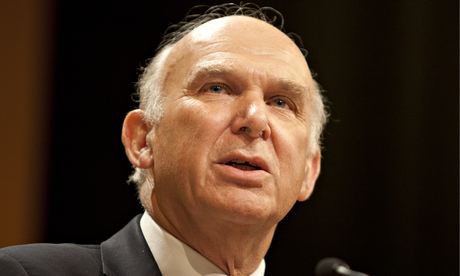
Cable said: 'Achieving the highest price possible at any cost and whatever the risk was never the aim of the sale.' Photograph: Martin Argles for the Guardian
The government's desperation to sell Royal Mail cost taxpayers £750m in a single day, the National Audit Office has said in a scathing report into the privatisation of the 500-year-old national institution.
The public spending watchdog says the business secretary Vince Cable ploughed ahead with plans to float Royal Mail at a maximum price of 330p-a-share despite repeated warnings from City experts that the government had vastly undervalued the company.
The audit office said in a report today that Cable chose not to heed the warnings and increase the flotation price from the 260-330p range because of fears it could put off institutional investors and jeopardise the flotation as postal workers were preparing for nationwide strike action.
The watchdog said the business department's keen desire to achieve a successful sale of Royal Mail within this parliament "resulted in the shares being priced at a level substantially below that at which they started trading".